
Protect it
Seal the finish
Freshly corrected gelcoat is bare and thirsty. Wax lasts a few months, sealant longer, and ceramic coating years with maintenance. In Keys sun, protection isn't optional.
Ceramic coating details★ 5.0 on Google Licensed & Insured Owner-Operated by Kevin Gardner
24.9477° N, 80.6079° W · Islamorada, FL
Finish Correction · Dockside · No Haul-Out
When a hull turns dull, chalky or faded, a wash won't bring it back. Oxidized gelcoat has to be physically removed — compounded, polished and sealed. We do it at your dock or on your lift in Key Largo, Islamorada and Tavernier, with a firm written quote before we start.
1,500+ vessels detailed Starke Yacht Care correction systems Service updates when useful
Is it oxidation, or just dirty?
Not sure whether your hull needs restoration or just a good wash? Wipe a clean, dry white cloth firmly across the hull above the waterline. Then check:
Chalky white or colored residue on the cloth
That's oxidized gelcoat. Wax won't fix it — the oxidized layer has to be compounded away first.
Dull, matte finish that used to shine
UV has degraded the surface. Polishing will restore depth and clarity.
Cloth comes away clean but hull looks tired
Likely light oxidation or old wax buildup — a wash and polish refreshes it without full correction.
Send us a photo of the hull in daylight and we'll tell you honestly which level of work it needs — including when the answer is "just a wash."
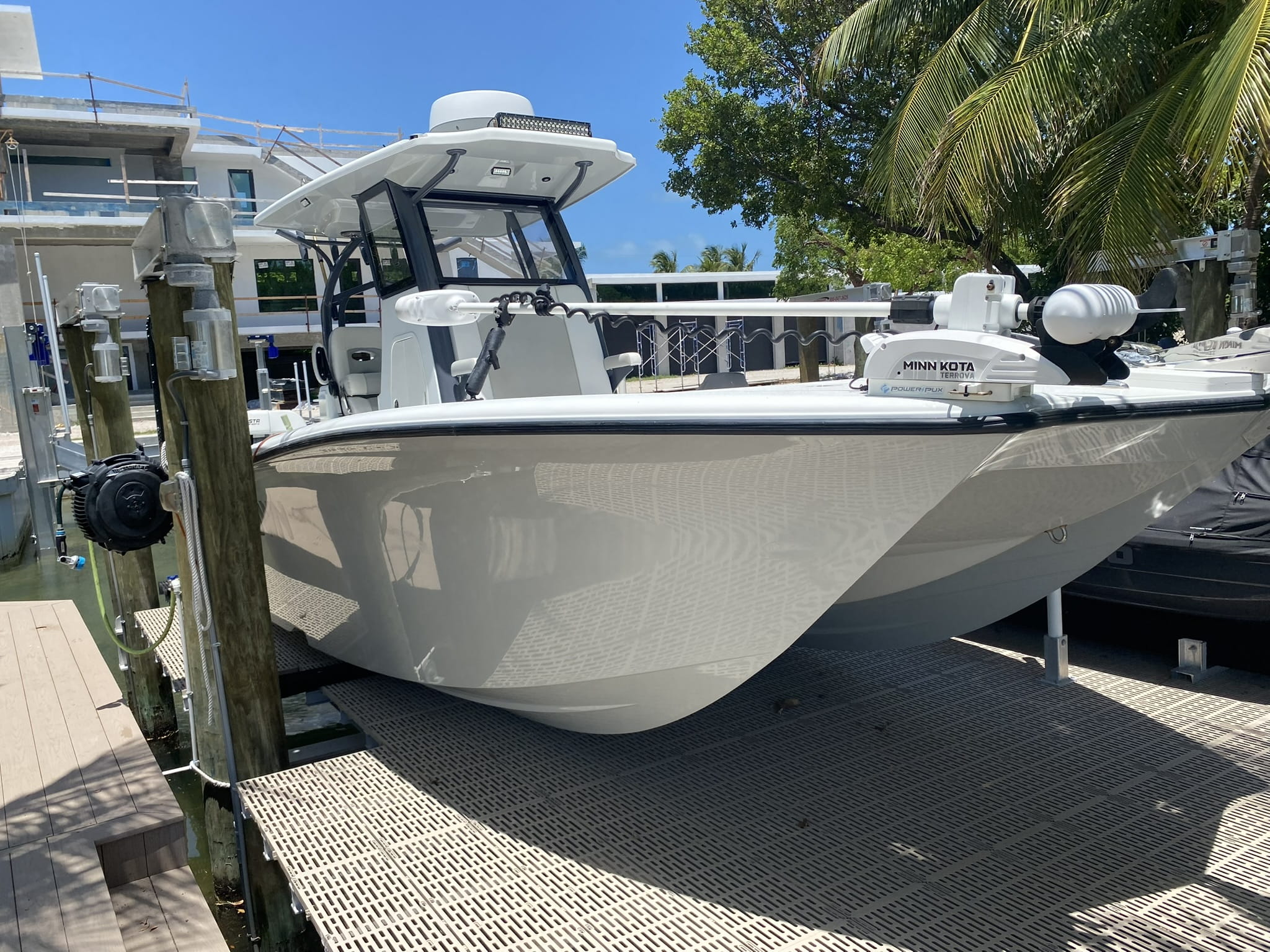
Before We Quote
Correction is labor-driven, so five things shape the job more than length alone:
Oxidation level
Light haze compounds fast; heavy chalk doubles machine time. The chalk test places you.
Hull color
Dark hulls show swirl and need finer polishing stages; light hulls forgive more.
Vertical scope
Sides to rub rail vs. deck and topsides only — confirm which your quote covers.
Access & setting
Open lift, tight slip, yard slot or trailer changes setup and working room.
Time since last protection
A hull with living wax polishes faster than one that's sat bare for seasons.
Firm before we start: photos or a dockside look produce a written quote with the full scope spelled out. If severe defects require wet sanding, that's flagged after inspection — never discovered mid-job.
The Correction Process
Close-up photos in daylight, hand wipe test for chalk, gloss check across representative panels. You get an honest read on oxidation level before any work is scheduled.
Full wash with marine-safe soap to remove salt film, grime and old wax residue so pads cut gelcoat — not dirt.
Rotary buffer with wool pad and Starke heavy-cut compound removes the oxidized layer and levels the chalky surface. This is the step that brings color back.
Dual-action polisher with foam pads refines the finish, removes compounding haze and restores depth and clarity — critical on dark hulls where swirls show.
Severe oxidation, deep scratches or stain penetration that polishing can't resolve gets graded wet sanding before compounding. Flagged in your written scope, never added by surprise.
The corrected finish is sealed with marine wax, polymer sealant, or ceramic coating for long-term protection. Completion photos sent with maintenance recommendations.
Proof, not promises
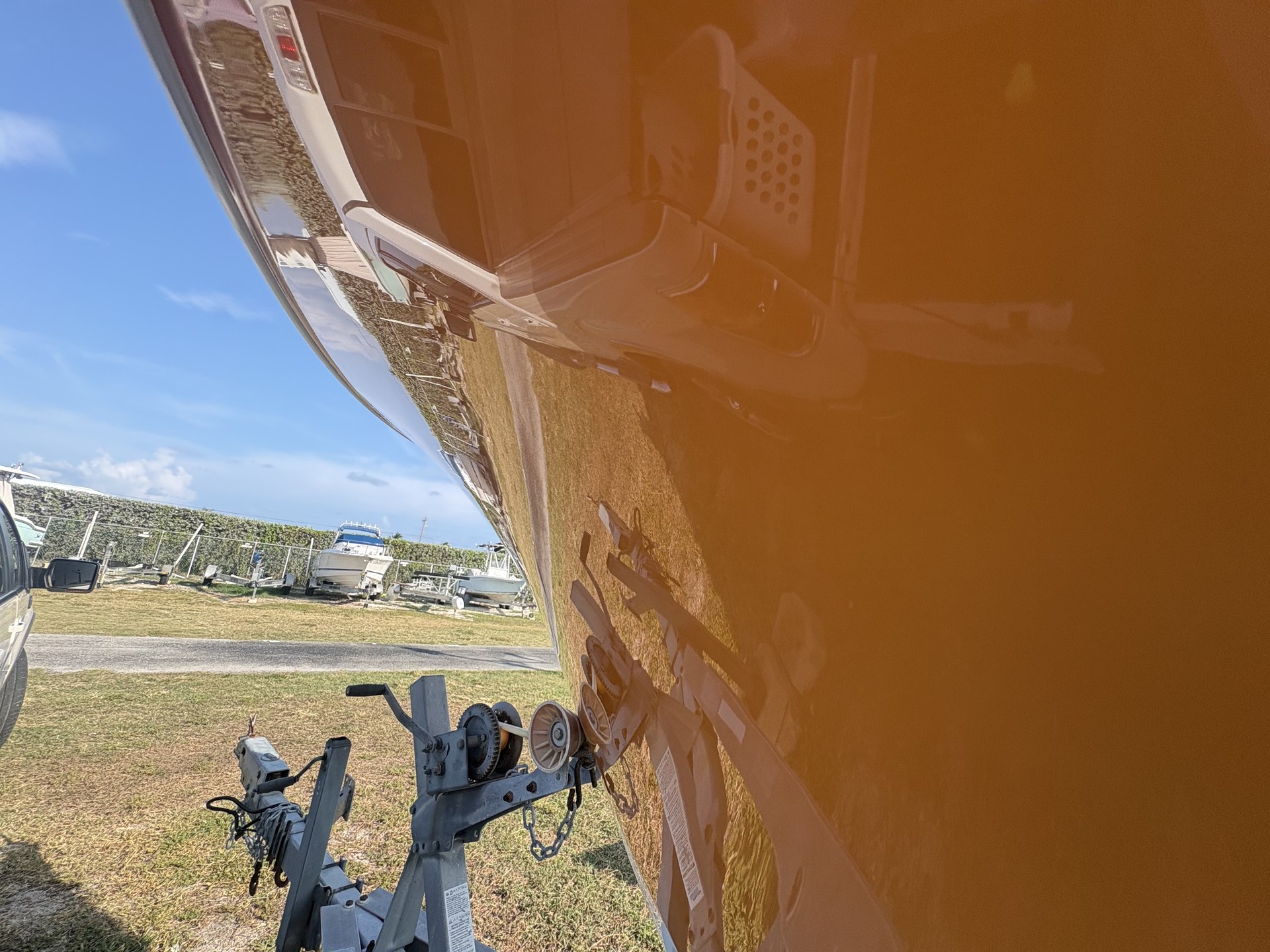
A full two-stage gelcoat correction on an orange center console, finished with polymer protection. Drag the slider — the reflection on the right is the same hull as the left.
See more corrections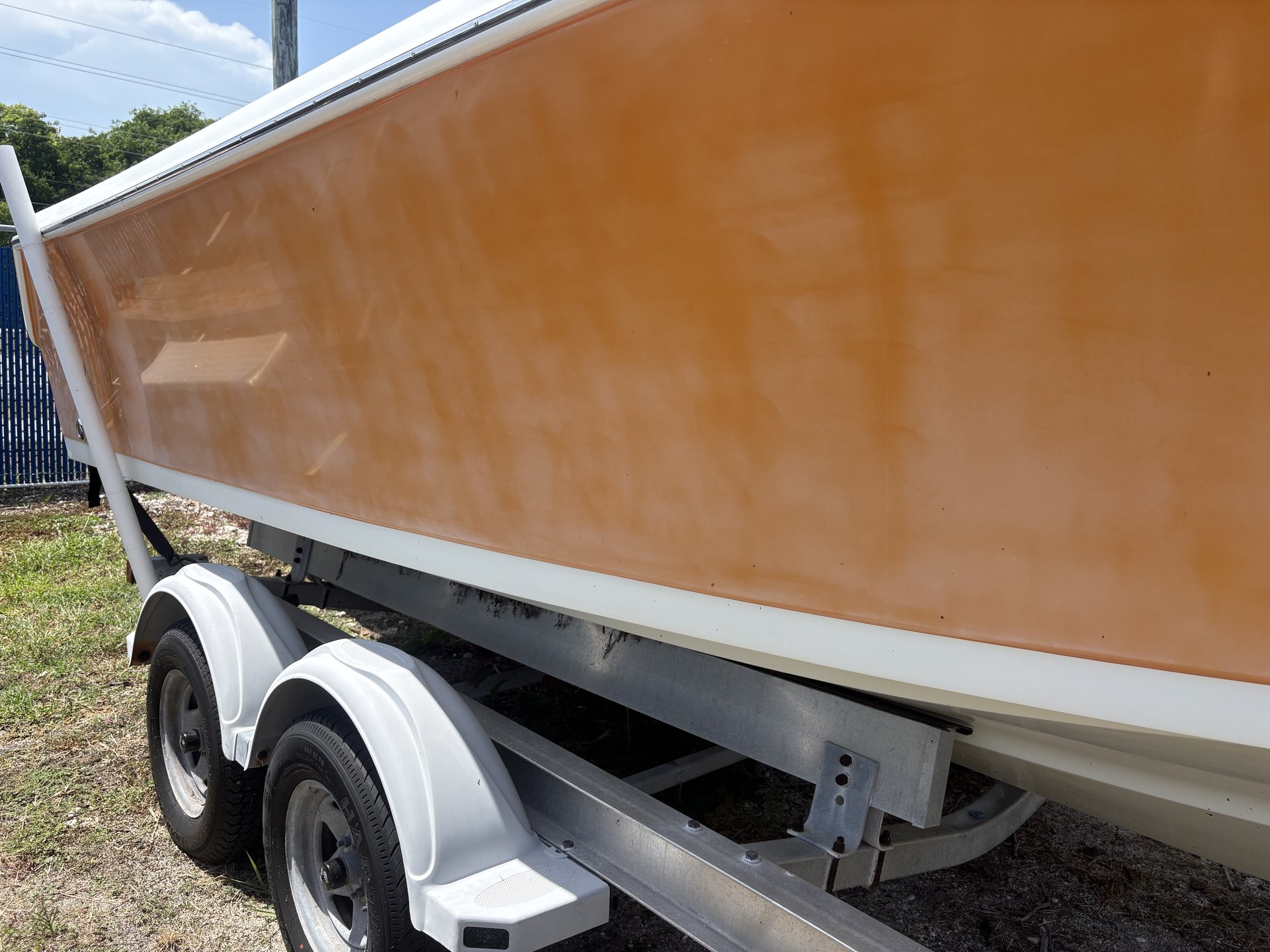
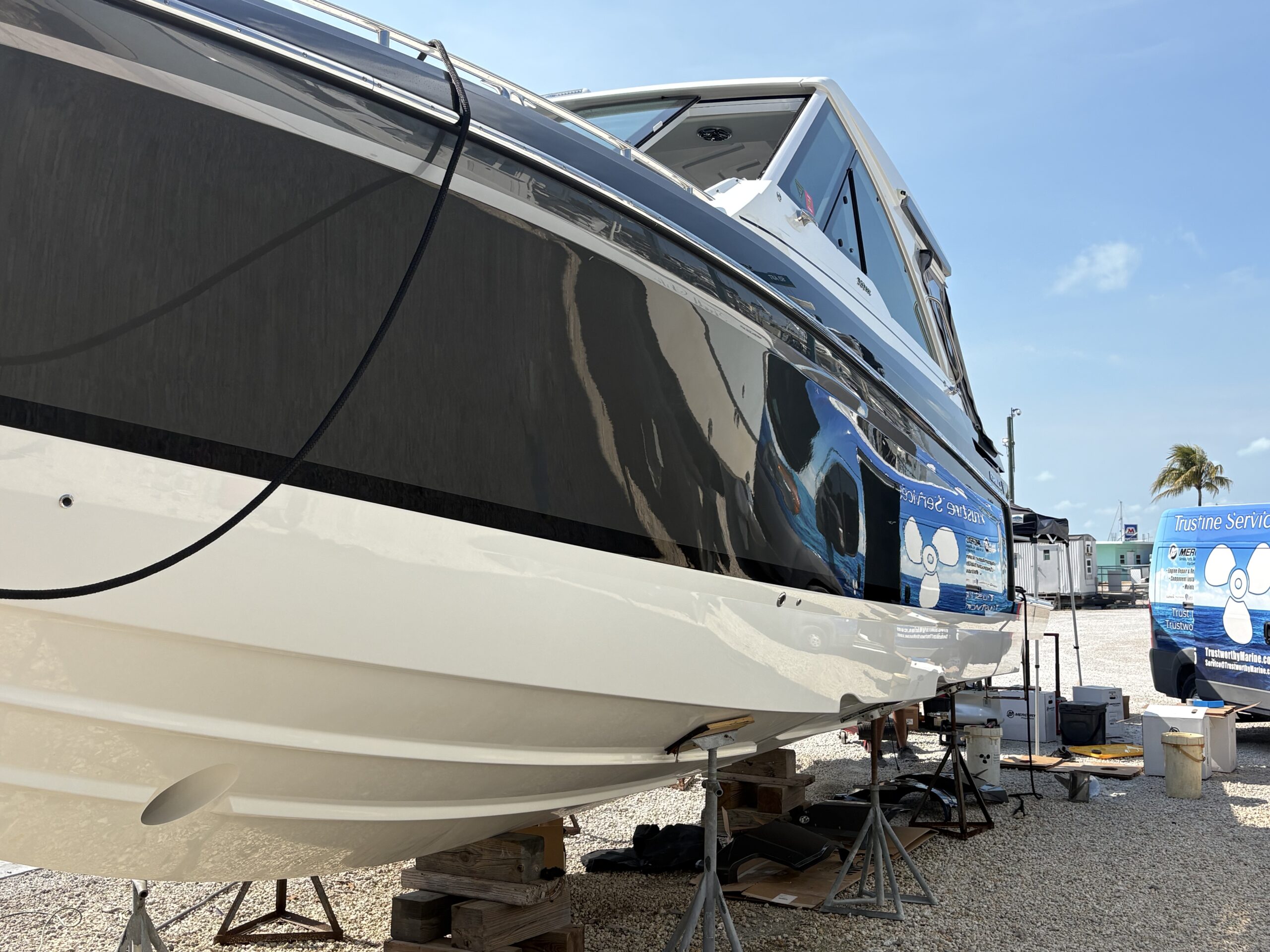
Case Study · Mangrove Marina, Tavernier
While the yacht was out of the water for engine service, we completed a full detail and two-stage gelcoat correction from the hardtop down to the waterline, then sealed the finish by hand.
Restoration vs. The Alternatives
Owners with badly oxidized hulls usually weigh three options. Here's the honest trade-off.
| Gelcoat Restoration | Repaint / Awlgrip | Do Nothing | |
|---|---|---|---|
| Time out of service | 1–2 days | Weeks | — |
| Result | Original gelcoat, restored gloss | New painted surface | Oxidation deepens yearly |
| Resale impact | Strong — survey-ready finish | Strong but rarely recouped | Survey flags chalky gelcoat |
| Right call when | Oxidation, chalk, light scratches | Gelcoat failure, deep damage | Never, in Keys sun |
If your hull is past the point where correction makes sense, we'll tell you that too — and point you toward a paint shop instead of taking your money.
Protect it
Freshly corrected gelcoat is bare and thirsty. Wax lasts a few months, sealant longer, and ceramic coating years with maintenance. In Keys sun, protection isn't optional.
Ceramic coating detailsMaintain it
Salt film left on a corrected hull accelerates re-oxidation. A recurring wash plan keeps the finish you just invested in from slipping away.
Wash & wax plansSell it
A restored hull photographs better, surveys better and holds its value at listing. Sale-prep correction is one of our most requested jobs each spring.
Sale preparationCoverage
We assess and correct faded, oxidized gelcoat at marinas, residences and yacht facilities from Key Largo to Tavernier — dockside or on your lift.
Marinas, waterfront homes and private slips — including Bluefin Rock Harbor and Marina del Mar areas.
View Key Largo coverageLocal correction work from our MM 80-area home base — Islamorada Yacht Village, Whale Harbor and Church Key.
View Islamorada coverageTavernier, Plantation Key and nearby facilities — including Mangrove Marina, where we corrected the Formula 380 above.
View Tavernier coverageFAQ
Send a daylight photo of the hull plus your length and where the boat is kept — slip, lift, yard or trailer. Oxidation level, hull color, access and vertical scope set the labor. You receive a firm written quote with the full scope spelled out before anything is scheduled.
Rotary wool and dual-action foam or wool pad polishing can correct many faded or chalky finishes. When machine polishing cannot resolve severe defects, wet sanding may be required before compounding.
A 30–40 foot vessel typically takes one full day (6–10 hours). Larger yachts, or hulls needing wet sanding, can take two days. The boat stays in the water or on the lift the entire time.
Yes. After correction we apply your choice of protection: marine wax, polymer sealant, or ceramic coating. We recommend based on how the boat is kept and your maintenance plan.
Yes. Fiberglass gelcoat, painted hulls, aluminum and varnished wood each require different compounds, pads and techniques. We assess the surface material and condition before confirming the process.
No. A wash removes surface grime, but dull or chalky gelcoat is oxidized material that must be physically removed through compounding and polishing. Waxing over oxidation traps the chalky layer and wastes the wax.
The correction itself is permanent — oxidation is removed, not covered. How long the gloss holds depends on protection and maintenance: waxed hulls in Keys sun re-oxidize within a couple of seasons, while ceramic-coated hulls with regular washes hold for years.
Get started
Gelcoat Restoration is already selected below. Add your length and a hull photo and we'll confirm scope in writing.
Phone: 305-396-1787
Hours: Mon–Fri 8 AM–4:30 PM · Sat–Sun 8 AM–1 PM
Location: Islamorada, the Keys, MM 80 area