

The short answer
In Florida, yachts kept outdoors or in the water full-time need a wash every 2 to 3 weeks and wax or sealant every 3 to 4 months. Gelcoat restoration is needed every 2 to 4 years depending on protection. Yachts on covered lifts or in dry storage can stretch washes to once a month. Ceramic coating extends protection to 2 to 5 years, but still requires a pH-neutral wash every 28 days to maintain its hydrophobic properties.
A one-off detail makes a yacht shine for a week. A recurring schedule keeps it protected all year — stopping salt film and oxidation before they ever set in.
Why Florida changes the math
If you moved your yacht here from the Great Lakes, the Pacific Northwest, or the Northeast, throw your old maintenance schedule out. Florida is a high-UV, high-salt, high-humidity environment that attacks marine finishes 365 days a year.
- UV Radiation: Florida sun breaks down the polymers in waxes and sealants in a fraction of the time it takes in northern climates. A wax that lasts six months up north may last eight weeks in Key Largo.
- Salt Film: Salt is hygroscopic (it pulls moisture from the air) and abrasive. Left on gelcoat, it acts like a magnifying glass for UV rays and etches the finish.
- Humidity & Tannins: Canal and creek water is rich in mangrove tannins, and the air is constantly humid. This combination breeds waterline staining and cabin mold much faster than open-ocean marinas.
Frequency by storage type
Where your yacht lives when you aren't using it dictates 80% of your detailing schedule.
Uncovered slip or mooring (highest exposure)
The yacht sits in saltwater, baking in the sun, 24/7. Salt film builds daily.
- Wash: Every 2 weeks.
- Protection: Polymer sealant every 3 months, or ceramic coating (highly recommended for this storage type).
Covered lift or covered wet slip (medium exposure)
Protected from direct UV and rain, but still exposed to salt spray, humidity, and ambient heat.
- Wash: Every 3 to 4 weeks.
- Protection: Marine wax or sealant every 4 to 6 months.
Dry stack or trailered at home (lowest storage exposure)
The yacht is dry and out of the sun when not in use. However, the transition from dry storage to saltwater and back creates its own issues (streaking, cowling oxidation).
- Wash: Immediately after every saltwater use (rinse at the ramp), plus a full hand-wash and dry every 4 to 6 weeks.
- Protection: Annual pre-season detail with wax or ceramic.
Frequency by service type
| Service | Recommended Frequency | Why |
|---|---|---|
| Exterior Wash | Every 2–4 weeks | Removes salt film before it etches the gelcoat or degrades the wax. |
| Wax / Sealant | Every 3–6 months | Replenishes the sacrificial UV layer that the sun burns off. |
| Hull & Waterline | Every 2–4 months | Removes tannin banding and scum that regular washes can't lift. |
| Gelcoat Correction | Every 2–4 years | Removes oxidation that has penetrated the wax layer. |
| Ceramic Coating | Every 2–5 years | Chemical bond provides long-term UV and hydrophobic resistance. |
| Interior / Mold | 1–2 times per year | Prevents mildew in closed cabins and treats humidity-trapped vinyl. |
How to tell if you're overdue
You don't need a gloss meter to know your yacht needs attention. Look for these three signs:
- The Chalk Test: Take a clean, dry white cloth and wipe it firmly across the hull above the waterline. If it comes away with a chalky white (or colored) powder, your gelcoat is oxidizing. Waxing over this will just trap the chalk.
- Water Behavior: Splash water on the hull. If it beads up tightly and rolls off, your protection is working. If it sheets flat and clings to the surface, the wax or sealant has failed.
- Rust Weeping: Orange streaks running down from rails, hinges, or cleats mean the metal is pitting. If caught early, it polishes out. If left, it stains the gelcoat permanently.
The Golden Rule: Never apply wax over oxidation. It's like painting over rust on a car. The chalky layer must be physically removed via gelcoat restoration (compounding and polishing) before a new protective layer is applied.
The maintenance-vs-restoration trap
The most expensive way to own a yacht in Florida is to wait until it looks bad, then pay to fix it. Here's the cycle we see on neglected hulls:
- Season one: the wax wears off early and nobody notices under the salt film.
- Season two: the hull turns dull; owners wash harder, which doesn't help oxidation.
- Season three: chalk appears, waterline staining bonds, and brightwork pits.
- Season four: a full correction is the only path back — and correction removes a microscopic layer of gelcoat that never grows back.
Maintenance preserves what restoration removes. Every skipped wash season converts future maintenance into permanent material loss — and shows up later in survey reports and resale impressions, where a chalky hull reads as deferred maintenance across the whole yacht.
The proactive route looks boring by comparison: a standing wash day, a quarterly protection rotation, and an annual look at the finish. Boring is exactly what a twenty-year-old hull with original gelcoat gloss looks like from the outside.
Building a recurring rhythm
Most yacht owners don't want to think about detailing schedules; they just want the yacht to look right when they walk down the dock. That's why a recurring care plan fits most Keys yachts — we build the schedule so you don't have to.
When you set up a standing monthly or bi-weekly route with us:
- Quarterly wax or sealant rotations are automatically scheduled and included.
- You get priority scheduling and a standing dock day, meaning you never have to call and beg for a slot before a holiday weekend.
- We track the finish's health and send you completion photos and notes every single visit — a written history of your hull over time.
- When something changes — oxidation starting, weep appearing, isinglass hazing — you hear about it early, while it's still small.
Ready to stop tracking it yourself? Set up a recurring plan through the quote form (choose "Recurring Care Plan" in Step 1), or call 305-396-1787 and tell us where she's kept — we'll recommend the cycle that fits your slip.
Frequency questions, answered
How often should I wash my yacht in Florida?
Yachts kept outdoors or in the water full-time need a wash every 2 to 3 weeks to prevent salt film from etching the gelcoat. Yachts on covered lifts or in dry storage can stretch washes to every 3 to 4 weeks.
How often should a yacht be waxed in saltwater?
Traditional marine wax needs to be applied every 3 to 4 months in Florida sun. Polymer sealants last 4 to 6 months. Ceramic coating extends protection to 2 to 5 years, though it still requires monthly pH-neutral washes.
How do I know if my yacht needs gelcoat restoration?
Perform the chalk test: wipe a clean, dry white cloth firmly across the hull. If chalky residue comes off, or if water stops beading and instead sheets flat, the gelcoat is oxidized and needs compounding and polishing before any wax is applied.
How often should I detail the interior of my yacht?
A full interior detail should happen at least once a year, ideally before the busy season or before a sale. Yachts in high-humidity areas like Florida canals or those left closed up for weeks at a time may need mold and mildew treatments twice a year.
Does a ceramic coated yacht still need to be washed?
Yes. Ceramic coating makes washing dramatically faster and prevents salt from bonding, but it does not make the yacht self-cleaning. A pH-neutral wash every 28 days is required to keep the hydrophobic properties intact in Florida conditions.
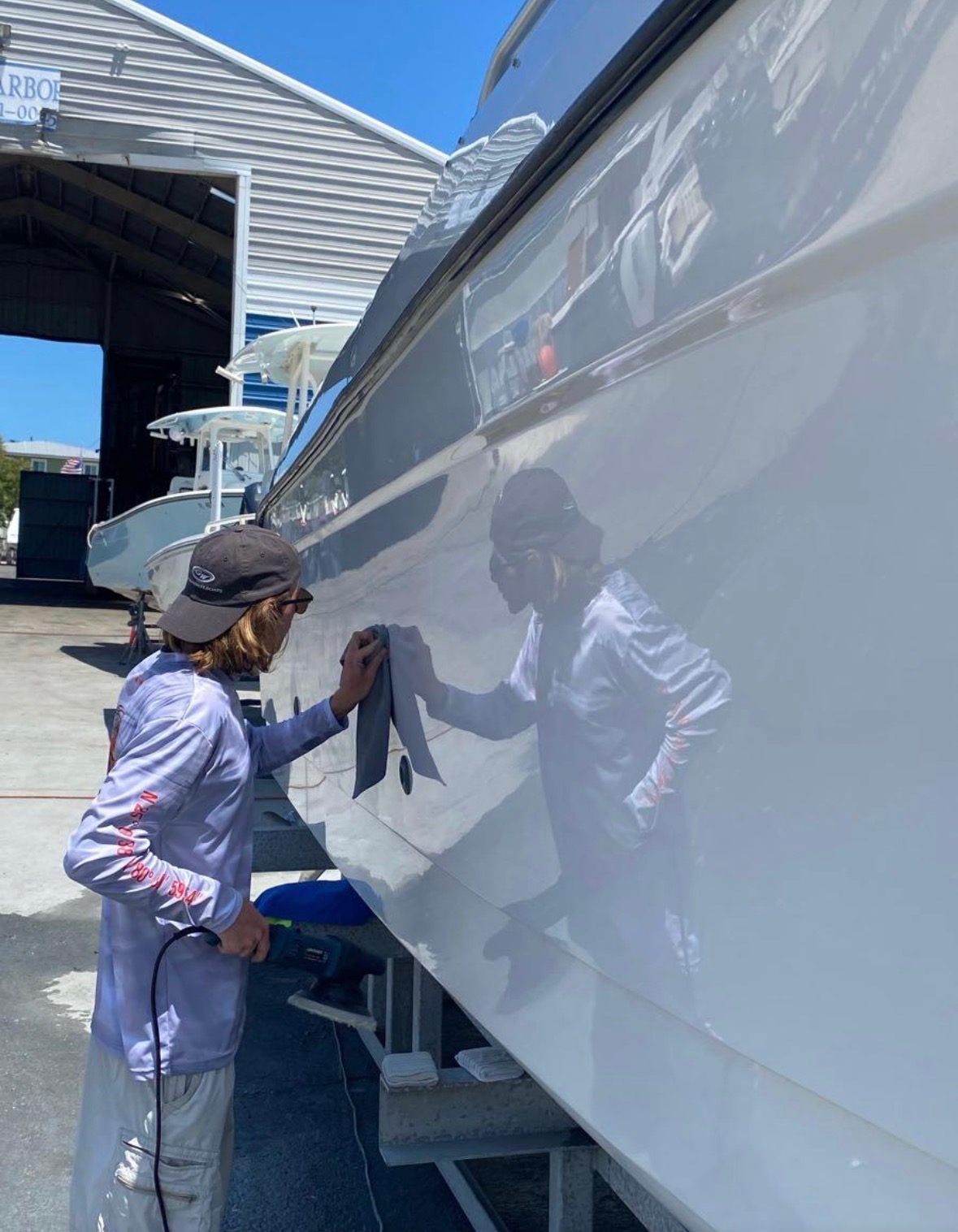
Kevin Gardner
Owner-operator, Islamorada Yacht Management Solutions. Ten-plus years and 1,500+ vessels detailed across the Upper Keys. Kevin writes from the docks, translating what he sees on hulls every week into honest maintenance advice for yacht owners.