The short answer
In Florida Keys conditions, marine wax protects for 2–4 months, polymer sealant for 4–6 months, and a professionally applied ceramic coating for 2–5+ years. For yachts kept outdoors, ceramic wins on longevity and wash effort by a wide margin. For covered-slip yachts already on a wax schedule, wax remains the sensible, lower-commitment choice.
Neither product fixes oxidation. Both routes start with a corrected surface — and that single fact decides more outcomes than the product label does.
What wax actually does to gelcoat
Marine wax is a sacrificial layer. Carnauba blends and polymer waxes sit on top of the gelcoat, filling micro-pores and creating a slick, glossy surface that sheds water and slows salt attachment.
That layer has no chemical bond to the hull. UV radiation and heat break it down continuously — which is why a wax that lasts six months in a northern climate burns off in weeks under Keys sun. Once it's gone, the gelcoat is bare again and oxidation resumes exactly where it left off.
Wax isn't a bad product. It's a schedule. Its protection only exists for as long as you keep reapplying it — quarterly, without gaps.
What ceramic coating actually does
Marine ceramic coatings are a 3D polymeric framework of silicon and oxygen atoms. Applied to a fully corrected and decontaminated hull, the coating chemically bonds to the gelcoat and cures into a hard, glass-like, hydrophobic layer.
Because it's bonded rather than sitting on top, it doesn't "burn off" the way wax does. It degrades slowly — through abrasion, harsh chemicals, and neglect — which is why maintenance washes every 28 days matter so much. Kept correctly, a coated hull in the Keys holds its water behavior and gloss for years.
About those 7-year claims: coatings that show 7+ year lifespans were tested in minimal-UV environments. The Keys are a high-UV, high-salt outlier. Honest local expectation is 2–5+ years depending on maintenance — anyone promising more on an outdoor Keys yacht is selling, not quoting.
Head-to-head in Keys conditions
| Marine Wax | Polymer Sealant | Professional Ceramic | |
|---|---|---|---|
| How it protects | Sacrificial layer on top | Longer-life sacrificial polymer | Chemically bonded, cured Si-O layer |
| Lifespan in Keys sun | 2–4 months | 4–6 months | 2–5+ years |
| Hydrophobic behavior | Good when fresh, fades fast | Good | Excellent and long-lived |
| UV / oxidation resistance | Moderate while present | Good | Best available |
| Stain & waterline resistance | Low | Moderate | High |
| Wash effort afterward | Normal | Slightly easier | Dramatically easier |
| Gloss character | Deep, warm gloss | Bright gloss | Glass-like depth |
| DIY realistic? | Yes | Yes | No — prep-critical |
Who should choose wax
- Covered slips and dry stack. Shade and cover cut UV load dramatically — wax life stretches and sealant often becomes the sweet spot.
- Seasonal or trailered yachts. If she's stored dry most of the year, an annual pre-season wax or sealant is rational.
- Selling within 12 months. A fresh correction plus wax or sealant photographs beautifully without investing in protection the next owner won't pay you for.
- Owners who enjoy the process. DIY waxing is genuinely fine — if the quarterly schedule actually happens.
Choosing wax isn't choosing wrong. It's choosing a commitment: four applications a year, every year, no gaps.
Who should choose ceramic
- Outdoor, in-water yachts. Full sun and salt spray are exactly the conditions where bonded protection pays for itself in longevity and wash effort.
- Dark hulls. Dark gelcoat shows chalk, swirl and water spots first — coating keeps the finish readable between washes.
- Owners keeping the yacht 3+ seasons. The prep investment amortizes across years of protection and faster washes.
- High-use and liveaboard vessels. More time on the water means more salt cycles; coating slows each one.
- Creek and canal yachts. Tannin staining and film release far more easily from a coated waterline.
Ceramic is a maintenance reducer, not a maintenance eliminator. Coated yachts do best on a recurring wash plan — every visit gets faster and the coating lasts longer.
Four myths that cause coating failures
Myth 1 — "Coated means I never wash it."
Neglect is the number-one killer of marine coatings. Salt left sitting on a coated hull still degrades the top layer. The 28-day pH-neutral wash isn't optional — it's what buys you years instead of months.
Myth 2 — "Ceramic stops scratches and dock rash."
It's a thin hardened layer, not armor. Fenders, pilings and trailing hooks still mark the gelcoat underneath. Coating protects against chemistry and UV, not physics.
Myth 3 — "It'll lock in the shine, even if she's chalky."
Coating locks in whatever is underneath — including oxidation. Applying over chalky gelcoat traps the defect permanently and wastes the product. Correction always comes first.
Myth 4 — "A DIY kit gives the same result."
The bottle is the easy part. Decontamination, machine correction, IPA wipe-down, flash timing, humidity control — that's the product. Missed prep causes flashing and bond failure that can require wet sanding to remove. This is the one service on our list we actively discourage DIYing.
Either way: prep decides the outcome
Wax over oxidation traps chalk. Sealant over contamination peels. Ceramic over anything but a corrected, IPA-clean surface fails. Every protection route — simple or serious — lives or dies on the preparation underneath it.
That's why our process starts with an honest assessment: chalk test, gloss check, photos in daylight. If your hull needs correction before protection, you'll hear it before you spend anything. And if your yacht is a better fit for sealant than ceramic, we'll say that too — we apply both sides of this comparison, so we have no incentive to oversell either.
The five-question decision check
- Where does she sit? Outdoor in-water → ceramic leans. Covered or dry → wax/sealant is fine.
- How long will you keep her? Under a year → don't buy long-term protection. Three-plus seasons → ceramic amortizes well.
- Will the quarterly wax schedule actually happen? Be honest. If no, ceramic or a recurring plan protects you from your own calendar.
- What's the hull's current condition? Chalky or dull → correction first, regardless of which protection follows.
- How do you feel about wash day? If it's a chore you avoid, coating plus a wash plan removes the friction that causes neglect.
Still torn? Send two daylight photos — full hull side plus a waterline close-up — with your length and where she's kept. We'll tell you plainly: wax, sealant, ceramic, or "not yet, fix the oxidation first." Start with the quote form or call 305-396-1787.
Protection questions, answered
Is ceramic coating worth it on a saltwater yacht?
For outdoor saltwater yachts, usually yes: 2–5+ year lifespan, dramatically easier washes, and far longer intervals between protections than quarterly waxing. For covered-slip yachts already on a wax schedule, wax stays the sensible pick.
How long does ceramic last in Keys saltwater?
Realistically 2 to 5+ years with a pH-neutral wash about every 28 days. Neglected coatings degrade faster. Seven-plus-year claims come from minimal-UV climates.
Can you wax over ceramic coating?
Not necessary, and it can mask the coating's hydrophobic behavior. Coated yachts need pH-neutral washing and, optionally, a coating-safe topper — not carnauba wax.
Does ceramic prevent oxidation and scratches?
It strongly resists oxidation over corrected gelcoat, but it does not stop physical scratches, fender marks or dock rash. It's a coating, not armor.
Can I apply it myself with a kit?
Not recommended. Prep is the product: decontamination, machine polishing, IPA wipe, controlled flash times. Missed steps cause flashing and bond failure that can require wet sanding to remove.
What maintenance does a coated yacht need?
A pH-neutral wash about every 28 days, no abrasive pads or harsh chemicals, and an annual inspection. We recommend pairing it with a recurring wash plan to keep it effortless.
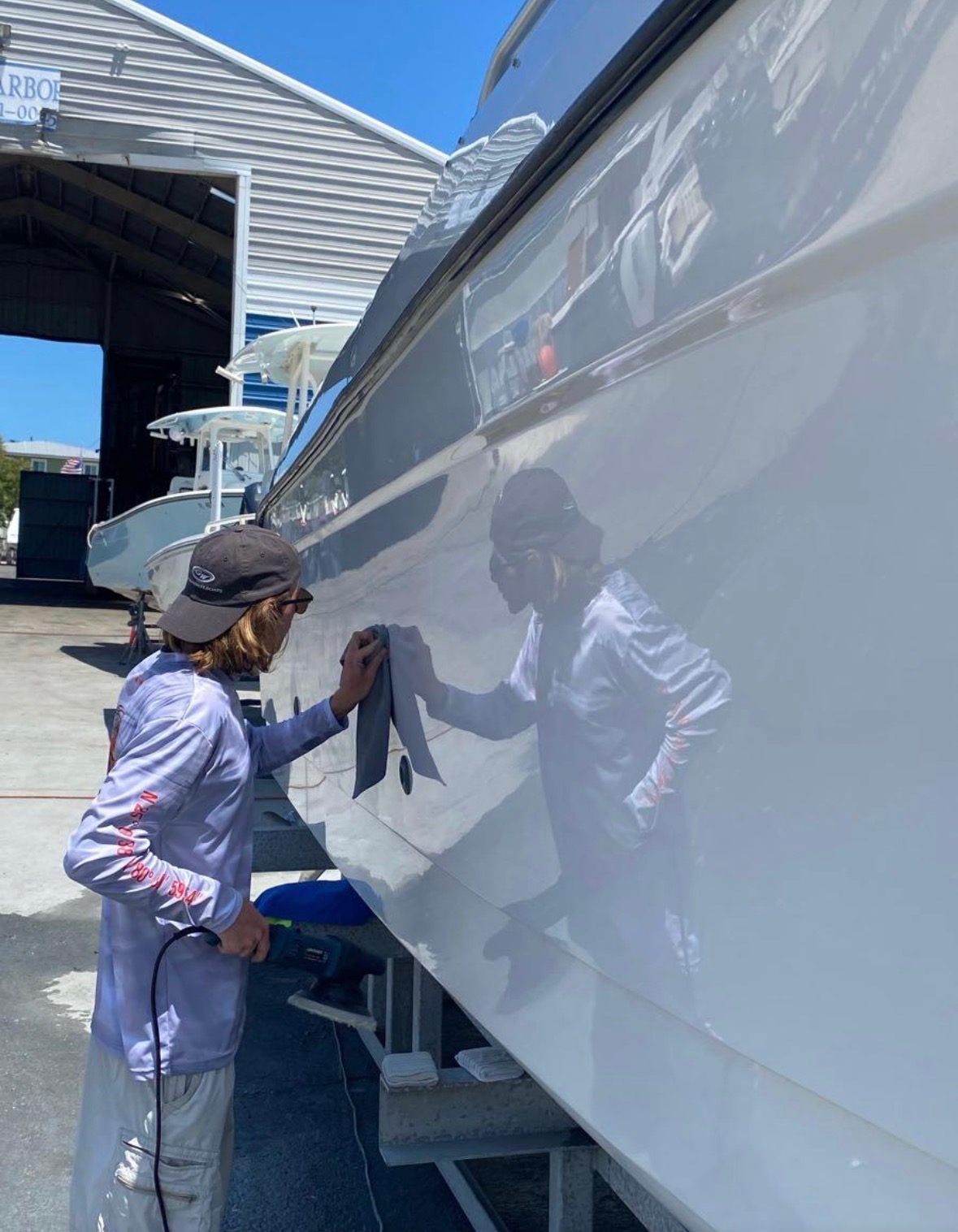
Kevin Gardner
Owner-operator, Islamorada Yacht Management Solutions, and a professional applicator of Starke Yacht Care and Dura Coat Technologies ceramic systems. Ten-plus years and 1,500+ vessels detailed across the Upper Keys — including plenty of coatings he had to talk owners out of.