
The short answer
Every legitimate yacht detailing quote in the Keys is built from six factors: length and layout, oxidation level, hull color, access, vertical scope, and time since last protection. That's why two identical-length yachts can receive very different quotes — and why any operator quoting a flat number sight-unseen is guessing.
The reliable path is simple: two daylight photos plus your length and location produce a firm written quote with the scope spelled out. This guide explains what operators are actually weighing when they build that number, and the questions to ask before you hire anyone.
Why flat-rate pricing doesn't exist in marine detailing
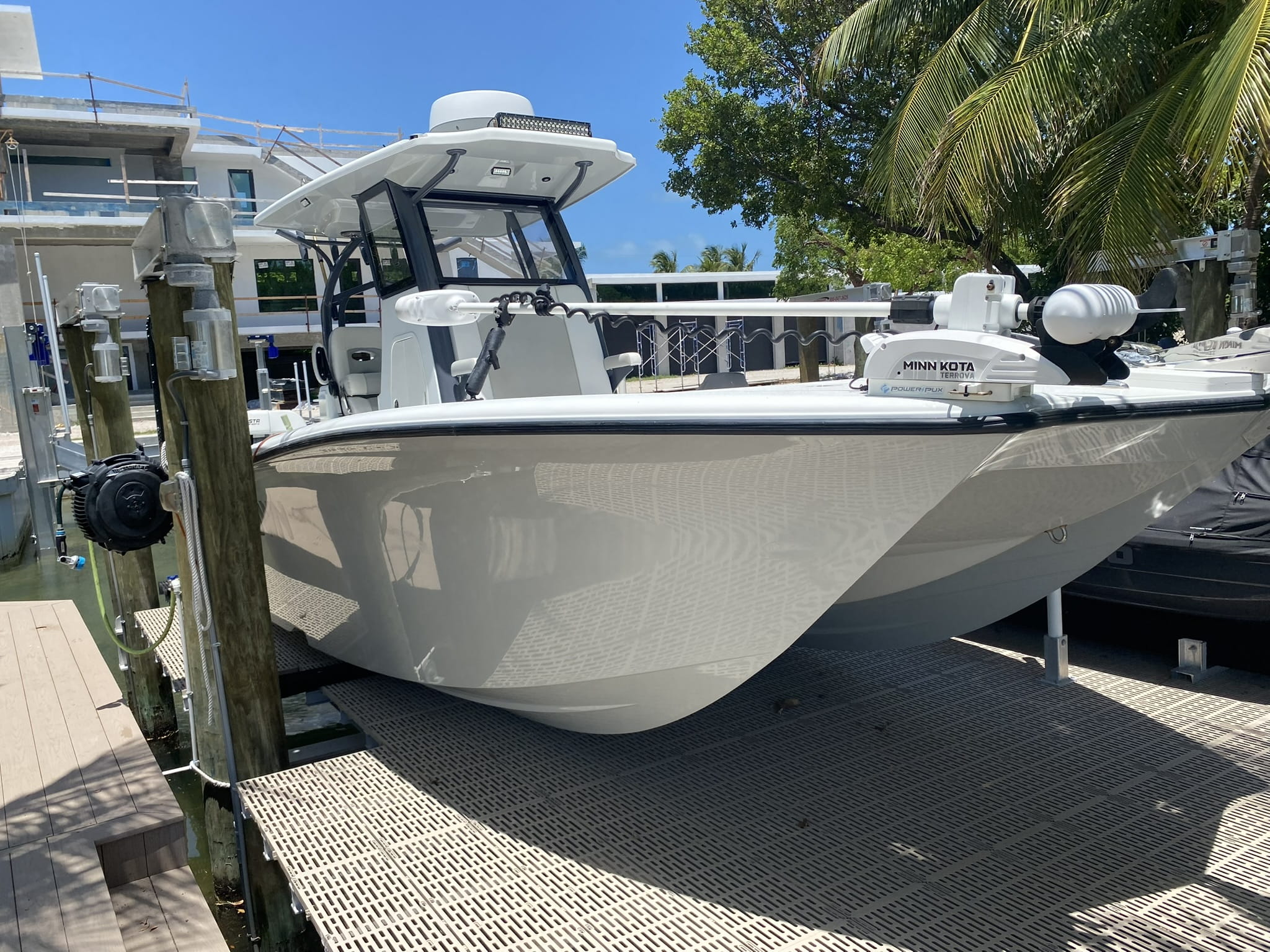
No two yachts in the Keys age the same way. A 35-foot center console kept under a covered lift with a quarterly wax schedule and a 35-foot center console left on an open mooring for a year are different projects wearing the same length label. One needs a wash and a wax rotation; the other needs compounding, polishing, waterline chemistry and a serious conversation about protection.
Any operator who publishes a single flat number for "a 35-foot yacht" is either padding it to cover worst cases or planning to add line items once the yacht is in front of them. Neither serves you. What serves you is a scope: here's what we see, here's what we'll do about it, here's what it includes, here's what it doesn't.
The six factors behind every quote
1 · Length and layout
Linear footage sets the baseline because surface area drives time. But layout matters as much as length: a tower yacht, a walkaround with wide side decks, or a hardtop with wrapped edges adds surfaces and detail work a simple open console doesn't.
2 · Oxidation level
The single biggest swing factor in correction work. Light haze compounds quickly; heavy chalk doubles or triples machine time. This is why the chalk test exists — a white cloth wipe tells an operator more about labor than the yacht's year or brand ever will.
3 · Hull color
Dark hulls show swirl marks and holograms, so they need finer polishing stages and more inspection passes under light. Light hulls forgive more. Same length, different labor.
4 · Access
An open lift with walk-around space details fast. A tight slip boxed in by neighbors, a creek dock with tide-limited access, or a trailer in a narrow driveway all add setup time and equipment changes. Access is also why mobile operators ask where the yacht lives before anything else.
5 · Vertical scope
"Detailing" can mean deck-and-topside only, or hull sides down to the rub rail. The second is substantially more work. Always confirm which one a quote covers — this is the most common source of apparent price differences between operators.
6 · Time since last protection
A hull with living wax or sealant polishes faster because the surface is already partially protected. A hull that's sat bare for two seasons needs decontamination and heavier cutting before anything else happens.
The photo-quote process, step by step
- Send two daylight photos: one full hull side, one close-up of the waterline or the chalkiest panel. Shade and dusk photos hide oxidation.
- Add three facts: length, where she's kept (marina and slip, canal lift, yard slot or trailer), and your timing.
- Receive a written scope: what's included, what's an add-on, and what the operator recommends against. At IYMS this is firm — not an estimate that drifts.
- Dockside confirmation when needed: correction and coating jobs sometimes need an in-person oxidation check. A good operator tells you upfront whether photos are enough.
- Stop-and-call rule: if conditions on site differ from the photos in a way that changes the work, the job pauses and the phone rings before anything extra happens.
Why daylight matters: oxidation, waterline staining and isinglass haze all read differently under marina floodlights or overcast shade. Daylight photos prevent both under-scoping (surprises later) and over-scoping (paying for work you don't need).
Why same-length quotes differ (and how to compare them)
When two operators quote the same yacht differently, it's rarely dishonesty — it's scope. Before comparing totals, line up these five lines from each quote:
- Does it include hull sides to the rub rail, or deck and topsides only?
- Does it include waterline chemistry, or is that an add-on?
- What protection follows correction — wax, sealant, or ceramic — and is it itemized?
- Is interior work included, scoped separately, or absent?
- What happens if oxidation is worse than photos showed — written change-order process, or verbal surprise?
Once those five lines match, the totals become comparable. Until they do, you're comparing different jobs wearing the same label.
Six questions to ask any detailer
- Is the quote written and firm, or an estimate that can move?
- Exactly what vertical scope does it cover?
- Which products and pads will you use on my hull color?
- Do you document with completion photos and condition notes?
- Can you provide proof of insurance for my marina?
- Who actually shows up — your crew, or subcontractors?
Any operator worth hiring answers all six without hesitation. Hesitation on number one or number five is your answer.
Where "cheap" gets expensive
- Unbuffered acid on gelcoat. Fast waterline jobs sometimes use harsh acid that etches decals, stripes and fittings. The repair outlives the savings.
- Coating over oxidation. Ceramic locks in whatever is underneath. Skipping correction to hit a number guarantees a failed finish that must be sanded off.
- No documentation. Without completion photos and notes, you can't track finish health year over year — or prove pre-existing condition at survey.
- Uninsured operators. One dropped hatch or buffered-through stripe with no recourse behind it.
The honest close: the right question isn't "what's the number?" It's "what's the scope, who stands behind it, and what will my hull look like in twelve months because of it?" Get those three answered in writing and the number takes care of itself. Start yours with two daylight photos and our quote form.
Quote questions, answered
How do yacht detailing quotes work in the Keys?
Six factors: length and layout, oxidation level, hull color, access, vertical scope, and time since last protection. Reputable operators confirm them from daylight photos or a dockside look and issue a firm written quote before scheduling.
Why did two detailers give me different numbers?
Usually scope: verticals, waterline chemistry, protection type and interior work differ between quotes. Compare what each includes before comparing totals.
Can I get a firm quote from photos alone?
For maintenance and waterline work, usually yes. For correction and coating, oxidation depth sometimes needs a dockside look — a good operator tells you which case you're in.
What should I send with a quote request?
Two daylight photos (full hull side plus waterline or oxidation close-up), your length, where she's kept, the service you're considering, and your timing.
Does a higher quote always mean better work?
No. Look for a documented process: named products, prep steps, completion photos, insurance and a written scope that explains its own labor.
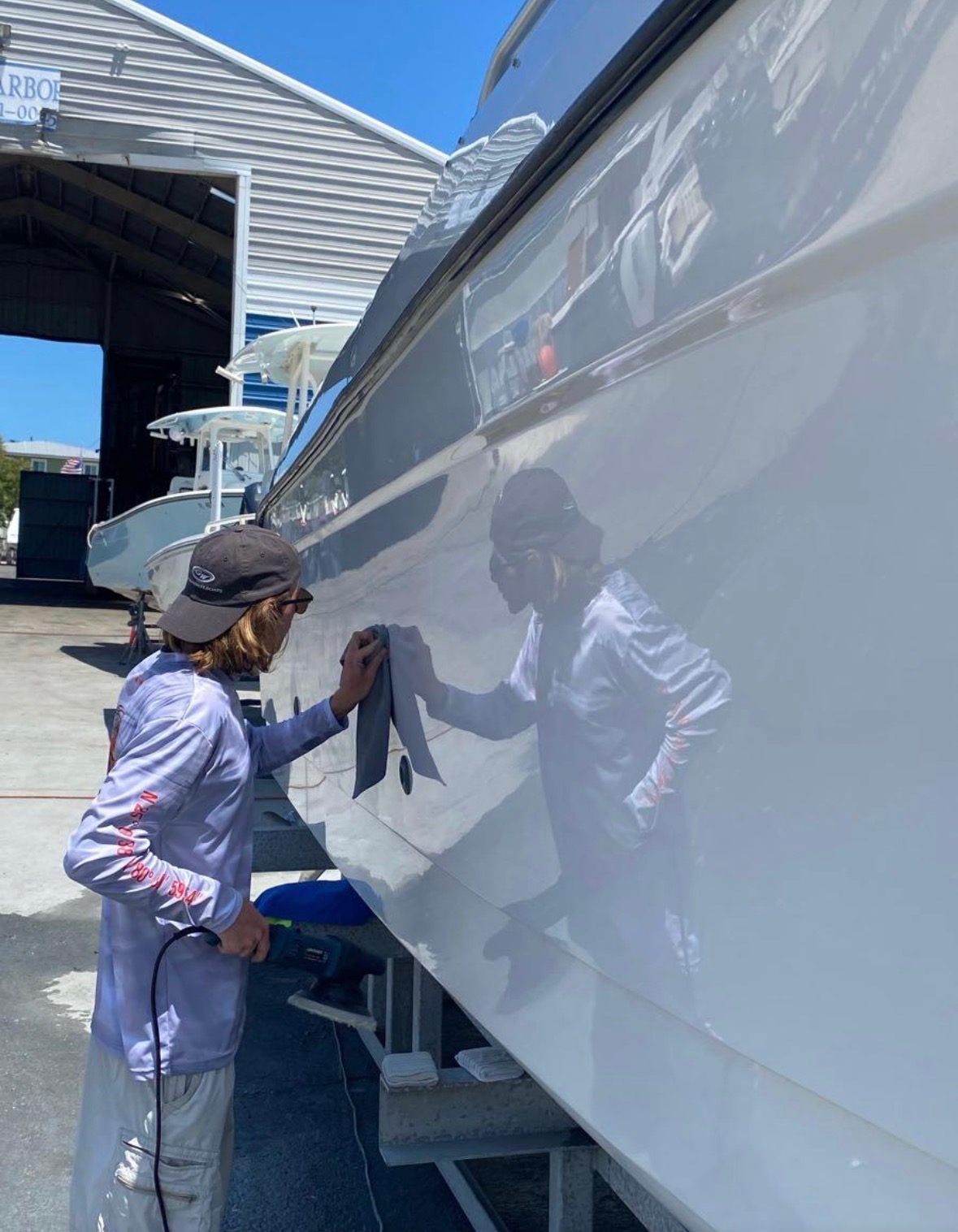
Kevin Gardner
Owner-operator, Islamorada Yacht Management Solutions. Ten-plus years and 1,500+ vessels detailed across the Upper Keys. Kevin writes from quotes he's actually issued — including the ones where the honest answer was "you don't need this service yet."