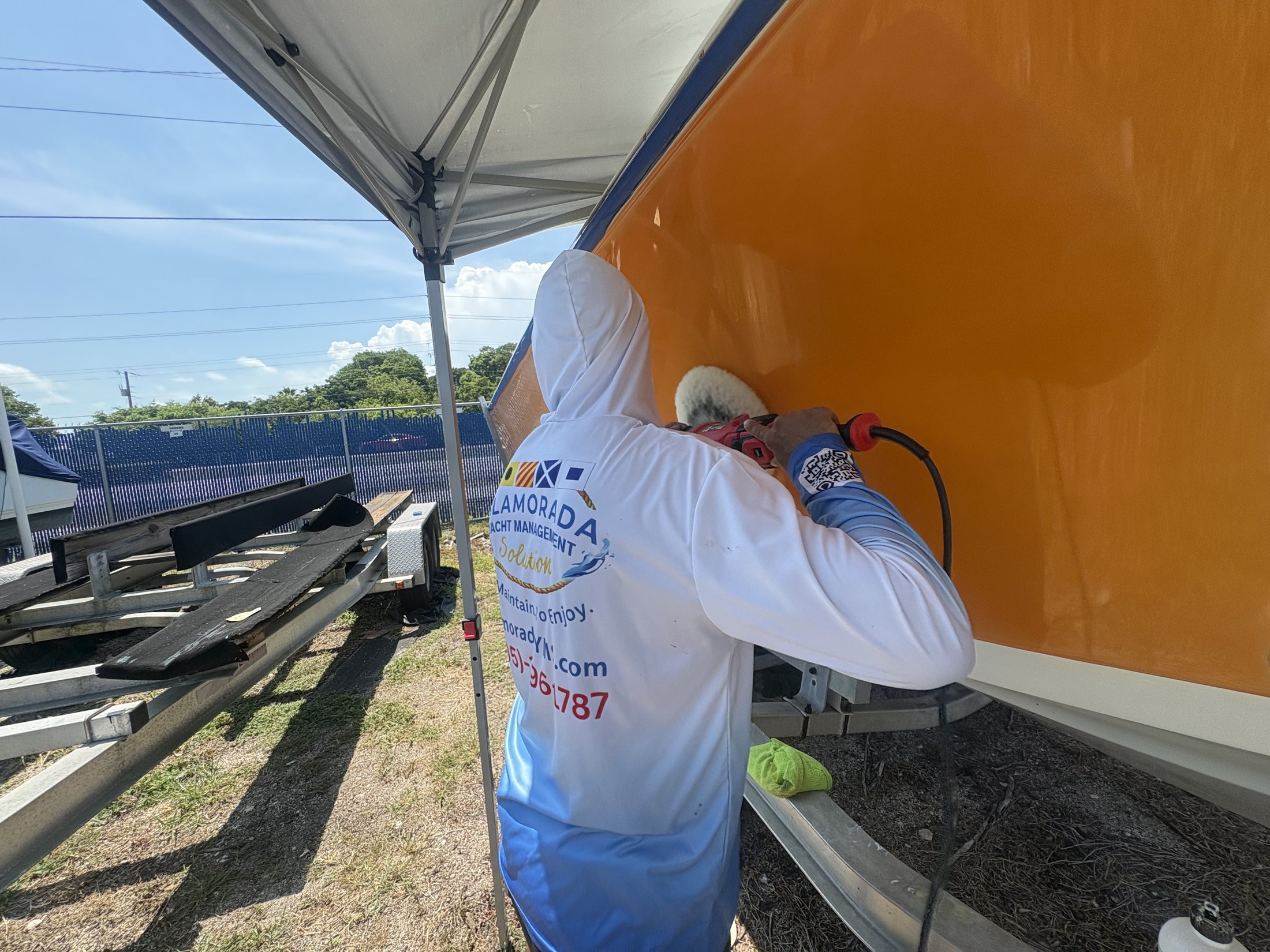

Machine compounding and polishing that brings chalky, sun-baked gelcoat back to a true, deep color, dockside, without a haul-out.
Gelcoat Restoration
UV breaks down the resin at the surface of gelcoat over time, leaving it chalky, faded, and rough to the touch. That damage doesn’t wash out. It has to be compounded away in stages, cutting back to a fresh layer of gelcoat and restoring depth and color before any wax or coating goes on top. It’s the most transformative service we offer, and usually the one owners wish they’d booked sooner.
Our Process
A staged compounding process built for gelcoat that’s been left to bake in Florida sun for years, not months.
When appropriate, we start with a test spot to gauge oxidation and determine the right correction approach for the gelcoat.
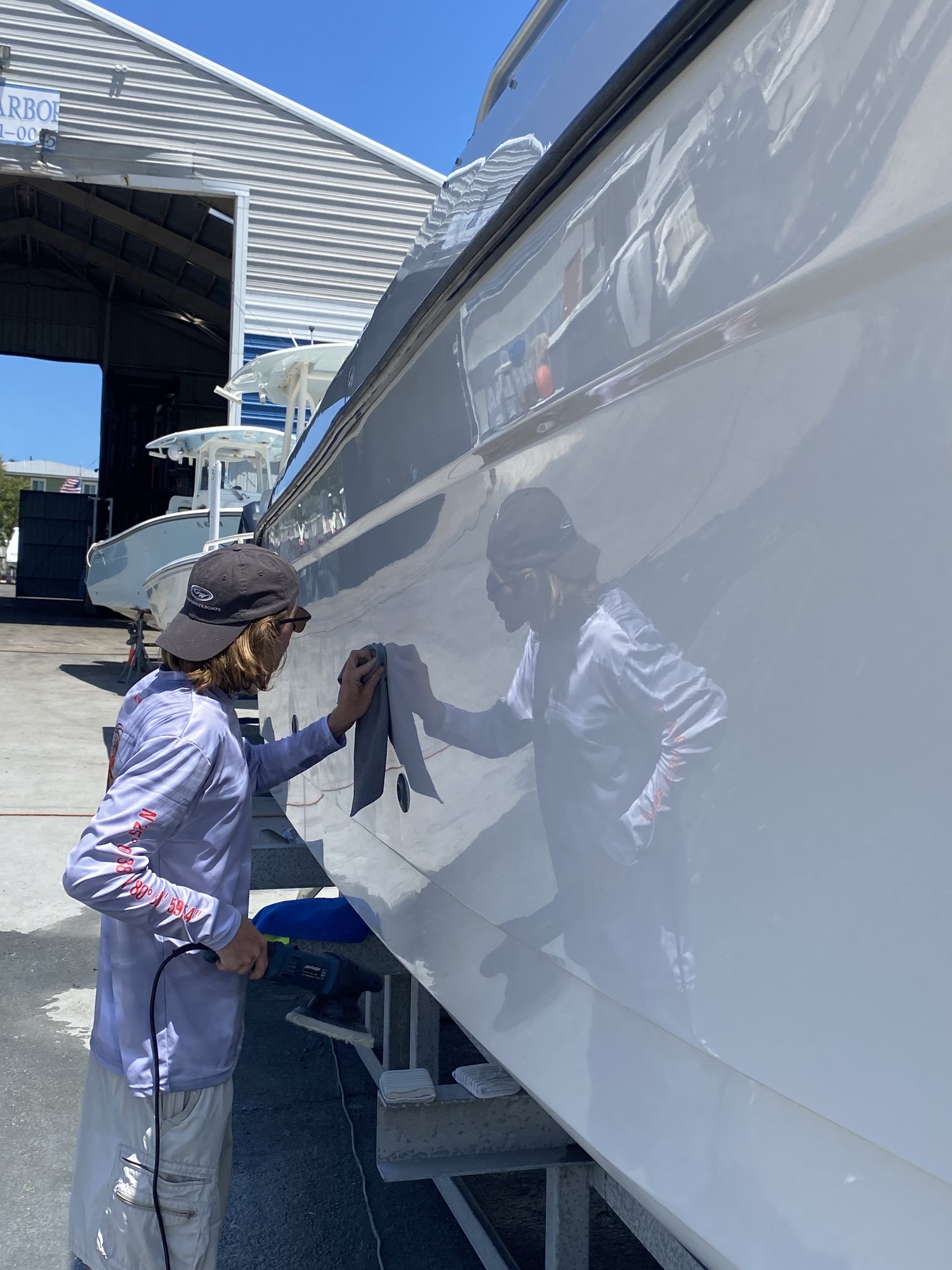
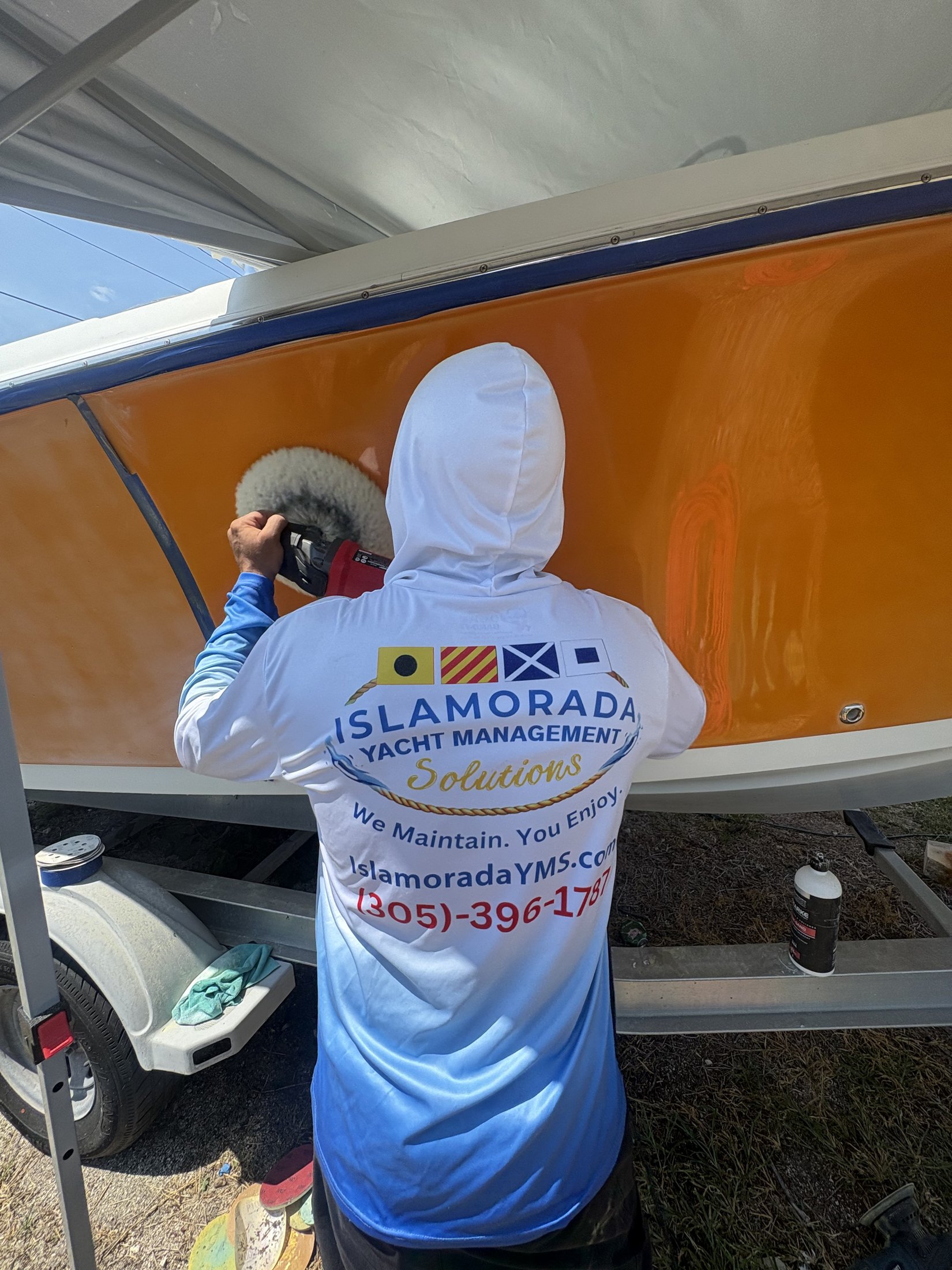
Machine compounding in stages, from a heavy cutting compound for severe chalking down to a fine polish that restores gloss and clarity.
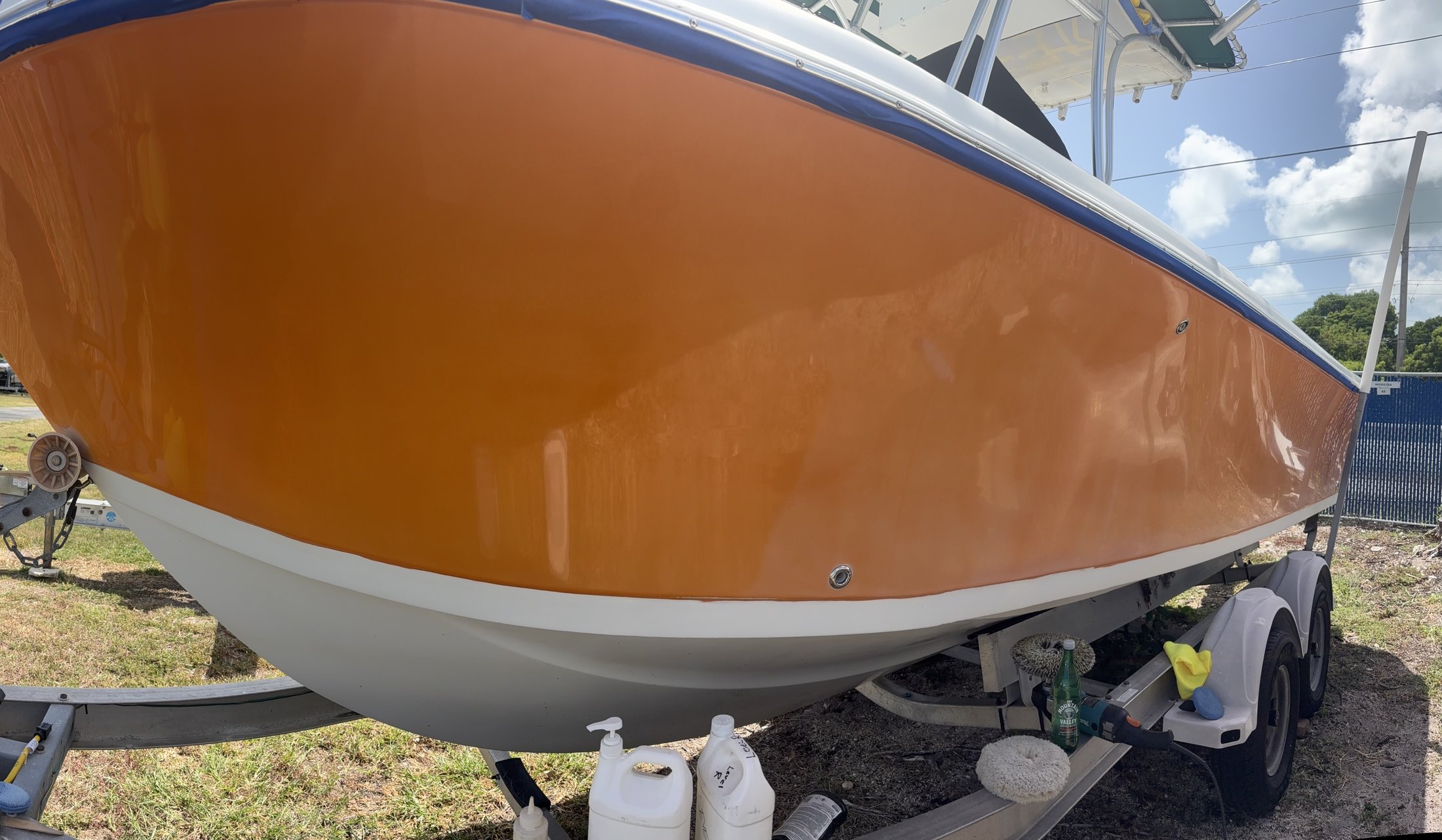
Correction continues until the hull’s original color and depth are restored, not just a temporary surface shine.
Once corrected, we lock in the results with wax, sealant, or a ceramic coating so the restoration actually lasts.
Why Choose Us
We don’t just react to a dull hull. We work to prevent it, with a team that actually shows up.
Restorations are assessed before compounding, and a test spot may be used when appropriate to guide the correction approach.
After correction, we can recommend a wax, sealant, or ceramic coating based on the vessel’s condition and how it is used.
When conditions allow, we document restoration work with photos so you can see the finish before and after service.
Recent Work
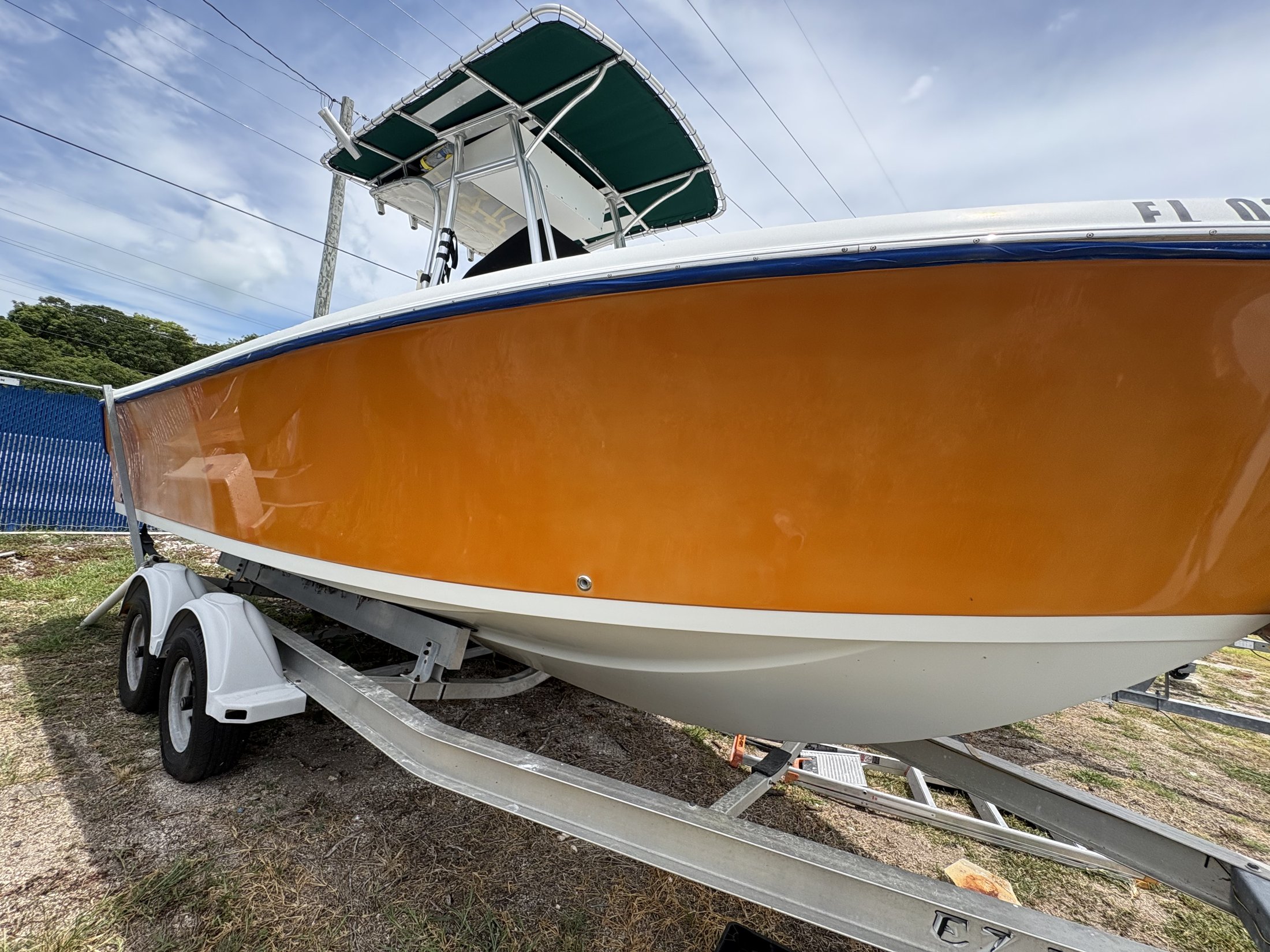
Representative finish-care photography from real Florida Keys gelcoat and protective-detailing projects.
Questions
What to expect before booking a restoration.
If the gelcoat looks chalky, feels rough or powdery to the touch, or wax no longer seems to bond and shine, it’s likely past what a wash and wax can fix.
Light to moderate scratches often improve significantly or disappear during compounding. Deep gouges into the gelcoat may need additional repair work beyond polishing.
Most single-hull restorations take one to three days depending on size and oxidation severity. We’ll give you a specific timeline after assessing the boat.
Yes, compounding is an abrasive process that removes a thin layer of oxidized gelcoat. We always test gelcoat thickness first and stage the cut to stay well within a safe range.
We strongly recommend it. A freshly corrected surface holds a ceramic coating exceptionally well, and it protects the work you just paid for.
Get Started
We get back to you the same day. If it’s urgent, call directly — we pick up.